
Linkintime : [] Test
India

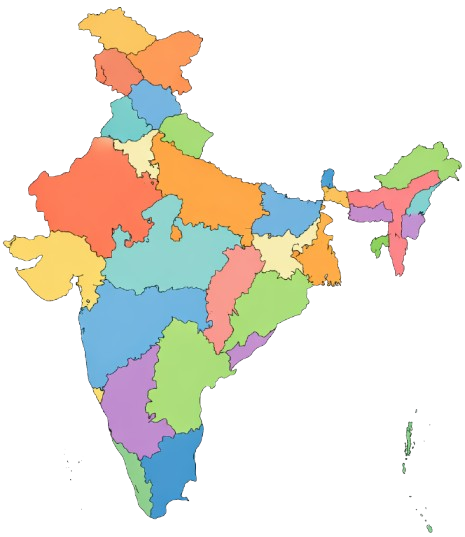
India is a large country in South Asia, the seventh-largest by area and the most populous in the world with over 1.4 billion people. It is a federal republic, a parliamentary democracy, and the world's largest democracy. New Delhi is its capital, while Mumbai is its largest city. The country has a diverse geography, a rich culture with many languages, and its official languages are Hindi and English, though many others are spoken.
India Information Portal

India – Facts, Symbols & National Structure

Short, clear and structured information about India — national identity, parliament, states, people and institutions.

28
States
8
Union Territories
Indian Civilian Awards
A Civilian Award is an honor given by a government to recognize outstanding contributions by individuals in non-military fields. These awards celebrate achievements that benefit society, culture, science, education, public service, sports, arts, or industry.
Category Rank Total Recipients
Bharat Ratna Highest 53
Padma Vibhushan Second Highest 231
Padma Bhushan Third Highest 1,534
Padma Shri Fourth Highest 3,551
Total Awards Given 5,369
These awards are not military honors, though military personnel can receive them for contributions outside combat or defense services. Key Points: Given by the President of India. Announced on Republic Day (January 26). Recognizes exceptional service to society.
Geography

Location : South Asia
Borders : Shares land borders with China, Nepal, Bhutan, Bangladesh, Myanmar, and Pakistan
Surrounding Waters : The Indian Ocean, the Bay of Bengal, and the Arabian Sea
Terrain : Varies widely from the Himalayan mountains in the north to the Thar desert in the west and tropical jungles in the northeast
PMO
Political parties by total timespan of their member holding PMO (as of 12 December 2025)
No Political party No of prime ministers Total year Of holding PMO
1 INC/INC(I)/ INC(R) 7 54 years, 166 days
2 BJP 2 17 years, 280 days
3 JD 3 2 years, 269 days
4 JP 1 2 years, 126 days
5 SJP(R) 1 223 days
6 JS(S) 1 170 days
National Anthem
India's national anthem is "Jana Gana Mana," a powerful song composed by Nobel laureate Rabindranath Tagore, originally in Bengali, adopted in its Hindi version by India's Constituent Assembly on January 24, 1950, celebrating the nation's unity, diversity, and sovereignty. It begins "Jana-gana-mana-adhinayaka jaya he..." and is a fundamental part of India's national identity, inspiring patriotism and pride.
Composer : Rabindranath Tagore (Nobel Laureate).
Original Language : Bengali.
Adopted : January 24, 1950, by the Constituent Assembly.
Meaning : 'The Soul of India' or 'The Dispenser of India's Destiny'.
Significance : Unites diverse regions and cultures, symbolizing India's sovereignty and spirit.
Lyrics (First Stanza in Hindi/Sanskrit)

Jana-gana-mana-adhinayaka jaya he Bharata-bhagya-vidhata

Panjaba-Sindhu-Gujarata-Maratha Dravida-Utkala-Banga

Vindhya-Himachala-Yamuna-Ganga uchchala-jaladhi-taranga

Tava subha name jage, tave subha asisa mage, gahe tava jaya-gatha

Jana-gana-mangala-dayaka jaya he Bharata-bhagya-vidhata


Anthem: Jana Gana Mana (adopted 1950).

Song: Vande Mataram (written by Bankim Chandra Chatterjee, adopted 1950).

The anthem serves as a unifying force, sung in schools, stadiums, and official functions, fostering a sense of shared identity among Indians.

National Song
India's National Song is "Vande Mataram," a patriotic hymn written in Sanskrit by Bankim Chandra Chatterji, which served as a powerful inspiration during the Indian freedom struggle and holds equal status with the National Anthem, "Jana Gana Mana". Adopted officially by the Constituent Assembly on January 24, 1950, it was first sung by Rabindranath Tagore in 1896 and encapsulates deep cultural pride and love for the motherland.
Composer : Bankim Chandra Chatterji.
Origin : First published in his Bengali novel Anandamath (1882).
Significance : Became the rallying cry for India's independence movement, symbolizing national awakening and resistance against British rule.
Official Adoption : Adopted by India's Constituent Assembly on January 24, 1950.
First Public Rendition : Sung by Rabindranath Tagore at the 1896 session of the Indian National Congress.

Vande Mataram!

Su-jalam, su-phalam, malayaja shitalam,

Shasyashyamalam, Mataram!

Vande Mataram!

Shubhrajyotsna pulakitayaminim,

Phullakusumita drumadala shobhinim,

Suhasinim sumadhura bhashinim,

Sukhadam varadam, Mataram! Vande Mataram, Vande Mataram!

Indian Armed Forces
India's most visited tourist spots include iconic historical sites like the Taj Mahal (Agra), Red Fort (Delhi), and forts in Jaipur, spiritual centers like Varanasi & the Golden Temple (Amritsar), beach destinations such as Goa, and natural wonders in Kerala, Ladakh, and Munnar, with cities like Delhi, Mumbai, and the royal cities of Rajasthan (Udaipur, Jodhpur) consistently drawing crowds for culture, food, and heritage.

An army is a nation's primary land military force, dedicated to defending borders, ensuring security, and protecting against threats, often acting in humanitarian roles during disasters, characterized by strict discipline, diverse units (infantry, artillery, etc.), and a hierarchical command structure led by a Chief of Staff, focused on duty, bravery, and sacrifice for the nation.

Core Functions & Mission
National Security : Defends against external invasions and internal insurgencies.
Peacekeeping : Maintains stability within borders and participates in international missions.
Disaster Relief : Conducts crucial rescue and aid operations during natural calamities.
Key Characteristics (General)
Structure : Organized into commands, corps, divisions, brigades, and battalions, each with specialized roles (e.g., infantry, armor, signals).
Leadership : Headed by a Chief of Staff, with ranks like General, Brigadier, etc., reporting up the chain.
Motto : Often emphasizes duty, sacrifice, and service, like India's 'Service Before Self'.
Recruitment : Involves rigorous physical and mental training to prepare soldiers for various roles.
Example: Indian Army

Largest component of India's armed forces, second-largest army globally.

Headquartered in New Delhi, with operational commands across India.

Known for bravery, discipline, and unity in diversity, serving as a "net security provider" in its region.

A navy is the maritime branch of a nation's armed forces, responsible for defending sea borders, projecting power, ensuring maritime security (like anti-piracy), and conducting humanitarian aid via ships, submarines, and aircraft. It's a multi-dimensional force with roles for officers in warships, submarines, aviation, special forces (like <>MARCOS), and technical roles, promoting international relations through joint exercises and port visits.

Key Functions:
Naval Warfare : Threatening or using force from the sea against hostile maritime powers.
Force Projection : Maintaining presence and influence globally.
Sealift & Deterrence : Transporting forces and providing nuclear deterrence.
Security : Anti-piracy, protecting trade routes, and securing marine territories.
Humanitarian Aid : Disaster relief and supporting international relations.
Components & Roles (Example: Indian Navy):
Ships & Submarines : Operating state-of-the-art vessels.
Naval Aviation : Flying aircraft like fighter jets, helicopters.
Marine Commandos (MARCOS) : Elite special forces for underwater/combat roles.
Technical Branches : Experts in engineering, electrical systems, communications, and hydrography.

In essence, a navy is crucial for a nation's defense, economic security (trade routes), and global standing, operating across air, sea, and underwater domains.

The Indian Air Force (IAF) is the air arm of the Indian Armed Forces, responsible for securing Indian airspace, conducting aerial warfare, and providing strategic airlift and humanitarian aid. Established in 1932, it has grown into a modern, technologically advanced, multi-role force, evolving from its British origins with the motto "Touch the Sky with Glory". The IAF protects national interests by defending against threats, supporting ground troops, and undertaking crucial missions like disaster relief and evacuations, making it a significant global air power.
Role : Defends Indian airspace, provides air support to the Army, conducts strategic airlift, and participates in peacekeeping/humanitarian missions.
Motto : 'Touch the Sky with Glory' (Nabh Sparsham Deeptam).
History : Formed in 1932 as the Royal Indian Air Force, becoming fully independent after India's Republic status in 1950.
Modernization : Continuously upgrades with advanced aircraft (like Su-30 MKI, Rafale) and systems, enhancing its strategic reach and capabilities.
Operations : Key participant in wars (1965, 1971), Kargil conflict, and major relief efforts (Nepal earthquake, Yemen evacuations).
Structure : A technologically intensive, multi-role force with significant personnel and aircraft, capable of network-centric operations.
President of india
India
Other Facts

National Symbols : Tricolor flag, Lion of Sarnath emblem, national anthem 'Jana Gana Mana, ' national animal 'tiger, ' and national flower 'lotus'
Economy : Has become a fast-growing major economy and a hub for IT services
National Holidays : Republic Day (January 26), Independence Day (August 15), and Gandhi Jayanthi (October 2)
Major Indian Festivals by Religion and Region
A categorized list of India’s most popular festivals, highlighting Hindu, Islamic, Sikh, Christian, and regional/tribal celebrations along with their significance.
Government and Politics
Form of GovernmentFederal republic and parliamentary democracy
CapitalNew Delhi
Head of StatePresident
Head of GovernmentPrime Minister
Largest CityMumbai
States and Union Territories28 states and 8 union territories
IndependenceGained independence on August 15, 1947
People and Culture
PopulationOver 1.4 billion people, making it the world's most populous country
LanguagesThe official languages are Hindi and English, but there are many other languages spoken throughout the country
CurrencyIndian Rupee
ReligionDiverse, with major religions including Hinduism, Islam, Sikhism, and Buddhism
Space Department
Indian Space Research Organisation (ISRO), the national space agency under the Department of Space (DOS)
ISRO (Indian Space Research Organisation) : The main operational arm for space science, technology, and applications, responsible for launches, satellite development, and missions.
DOS (Department of Space) : The overarching government body, formulating policies and overseeing space programs, with ISRO as its main implementer.
IN-SPACe (Indian National Space Promotion and Authorisation Centre) : An autonomous agency within DOS, created to encourage private sector involvement, authorize activities, and share ISRO infrastructure with private players.
NewSpace India Limited (NSIL) : A commercial arm under DOS for marketing space products and services.
All AIIMS in India (2025)
Complete List with Year & Status

The All India Institutes of Medical Sciences (AIIMS) are India’s most prestigious government medical institutions. They provide high-quality medical education, advanced healthcare services, and medical research. This article presents a complete and updated list of all AIIMS in India, including working, under construction, and planned AIIMS, in a simple and easy-to-understand timeline format.

What is AIIMS?

AIIMS are autonomous public medical universities established by the Government of India. Their goal is to provide affordable and world-class healthcare and to train the best doctors and medical researchers for the country.

AIIMS New Delhi – First and oldest AIIMS in India(1956).
AIIMS Bhopal, Bhubaneswar, Jodhpur, Patna, Raipur, Rishikesh – Expansion under Phase II(2012).
AIIMS Nagpur, Mangalagiri, Rae Bareli – New generation AIIMS start operations (2018).
AIIMS Gorakhpur, Kalyani, Bathinda, Bibinagar, Deoghar – Strengthening regional healthcare (2019).
AIIMS Rajkot, Guwahati, Vijaypur (Jammu), Bilaspur – Major boost to North-East and border regions (2020).
AIIMS Madurai – New AIIMS for Tamil Nadu with phased development (2021).

AIIMS New Delhi (1956)
AIIMS Bhopal (2012)
AIIMS Bhubaneswar (2012)
AIIMS Jodhpur (2012)
AIIMS Patna (2012)
AIIMS Raipur (2012)
AIIMS Rishikesh (2012)
AIIMS Nagpur (2018)
AIIMS Mangalagiri (2018)
AIIMS Rae Bareli (2018)
AIIMS Gorakhpur (2019)
AIIMS Kalyani (2019)
AIIMS Bathinda (2019)
AIIMS Bibinagar (2019)
AIIMS Deoghar (2019)
AIIMS Rajkot (2020)
AIIMS Guwahati (2020)
AIIMS Vijaypur, Jammu (2020)
AIIMS Bilaspur (2020)
AIIMS Madurai (2021)

AIIMS Darbhanga (Bihar)
AIIMS Rewari (Haryana)
AIIMS Manethi (Haryana)
AIIMS Awantipora (Jammu & Kashmir)
AIIMS Manipur

AIIMS Bengaluru (Karnataka)
AIIMS Kerala

Provide affordable tertiary healthcare
Produce highly skilled doctors and specialists
Reduce healthcare inequality between regions
Promote medical research and innovation

From a single institute in 1956 to a nationwide network, AIIMS has transformed India’s healthcare system. With working, under-construction, and planned institutes, AIIMS continues to expand its reach and improve access to quality medical education and healthcare for millions of people.

Fastest Trains in India
Speed, Comfort & Technology

Indian Railways has transformed dramatically over the years. From slow long-distance journeys to high-speed, semi-bullet trains, India is steadily moving towards faster and more comfortable rail travel. Below is a list of some of the fastest trains in India along with their maximum operational speeds.

1. Vande Bharat Express – Train 18 (22439)
Maximum Speed: 180 km/h

Vande Bharat Express is India’s pride and the fastest train currently in operation. It is completely made in India and offers world-class features such as automatic doors, modern seating, and advanced safety systems.

2. Gatimaan Express (12049 / 12050)
Maximum Speed: 160 km/h

Gatimaan Express connects Delhi and Jhansi and was India’s first semi-high-speed train. It significantly reduced travel time and set the foundation for faster trains in the country.

3. New Delhi – Bhopal Shatabdi Express (12002)
Maximum Speed: 150 km/h

This Shatabdi Express is known for its punctuality and comfort. It plays a vital role in fast intercity travel between northern and central India.

4. Rajdhani & Shatabdi Express Trains
Mumbai – New Delhi Rajdhani Express (12951) – 140 km/h
New Delhi – Kanpur Shatabdi Express (12034) – 140 km/h

Rajdhani and Shatabdi trains are premium services offering faster travel with fewer stops and better onboard facilities.

5. High-Speed Rajdhani & Duronto Trains
New Delhi – Howrah Rajdhani Express (12302) – 135 km/h
New Delhi – Sealdah Duronto Express (12260) – 135 km/h
6. Other Fast Express Trains
Mumbai LTT – H. Nizamuddin AC Superfast Express (22109) – 130 km/h
H. Nizamuddin – Bandra Garib Rath Express (12910) – 130 km/h
Mumbai Central – Ahmedabad AC Double Decker Express (12932) – 130 km/h
New Delhi – Howrah Duronto Express (12273) – 120–130 km/h
New Delhi – Allahabad Duronto Express (12276) – 120–130 km/h
Howrah – Anand Vihar Yuva Express (12249) – 120–130 km/h
7. Medium High-Speed Trains
Maharashtra Sampark Kranti Express (12908) – 110 km/h
Kota – H. Nizamuddin Jan Shatabdi Express (12059) – 110 km/h

India’s railway network is rapidly evolving with a strong focus on speed, safety, and passenger comfort. With projects like Vande Bharat and upcoming bullet train corridors, the future of Indian Railways looks faster and smarter than ever

India's most visited tourist spots
India's most visited tourist spots include iconic historical sites like the Taj Mahal (Agra), Red Fort (Delhi), and forts in Jaipur, spiritual centers like Varanasi & the Golden Temple (Amritsar), beach destinations such as Goa, and natural wonders in Kerala, Ladakh, and Munnar, with cities like Delhi, Mumbai, and the royal cities of Rajasthan (Udaipur, Jodhpur) consistently drawing crowds for culture, food, and heritage.

Qutub Minar (Delhi) : Tallest brick minaret
Amer Fort (Jaipur) : Rajput architecture & history
Agra : Home to the majestic Taj Mahal, Agra Fort, and Fatehpur Sikri.
Jaipur (Pink City) : Famous for Amber Fort, Hawa Mahal, City Palace, and vibrant markets.
Delhi : Features Red Fort, Qutub Minar, India Gate, Lotus Temple, and Humayun's Tomb.
Udaipur (City of Lakes) : Known for its stunning palaces, lakes (Pichola), and romantic ambiance.
Varanasi : India's spiritual heart, famous for its ancient ghats (Manikarnika Ghat) on the Ganges River.
Amritsar : Attracts millions to the serene Golden Temple (Harmandir Sahib).

Varanasi (UP) : One of the oldest living cities
Golden Temple (Amritsar, Punjab) : Holiest Sikh shrine
Tirupati Balaji (Andhra Pradesh) : One of the richest temples
Vaishno Devi (J&K) : Major Hindu pilgrimage
Ajmer Sharif Dargah (Rajasthan) : Sufi pilgrimage site

Kovalam (Kerala) : Crescent-shaped beaches
Puri Beach (Odisha) : Religious + coastal tourism
Andaman & Nicobar Islands : Coral reefs & clear waters
Goa : Renowned for its lively beaches (Palolem), vibrant nightlife, and Portuguese heritage.
Kerala : Famous for tranquil backwaters (Alleppey), tea plantations (Munnar), and beautiful beaches.

Ooty (Tamil Nadu) : Queen of Nilgiris
Munnar (Kerala) : Tea estates & scenic views
Ladakh (Leh) : High-altitude desert known for stunning landscapes, Pangong Lake, and monasteries.
Munnar : A hill station in Kerala with mist-covered tea gardens.
Manali/Shimla : Popular Himalayan hill stations for cool weather and adventure.
Darjeeling : Famous for tea estates and the Himalayan toy train.

Mumbai : India's financial capital, with Gateway of India, Marine Drive, and Bollywood.
Kolkata : Known for colonial architecture (Victoria Memorial), literature, and festivals.
Hampi : An UNESCO site with ruins of the Vijayanagara Empire.

Mumbai : Gateway of India, Marine Drive
Delhi : India Gate, Lotus Temple
Bengaluru : Tech hub & gardens
Kolkata : Colonial architecture & culture

Uttarakhand : Jim Corbett National Park
Rajasthan : Ranthambore National Park
Assam : Kaziranga National Park
West Bengal : Sundarbans

These places offer diverse experiences, from spiritual journeys and historical exploration to relaxing beach holidays and mountain adventures, making India a top global destination.

Major Leaders of India’s Freedom Struggle (1857–1947)
India’s freedom struggle was a collective movement involving leaders, revolutionaries, social reformers, and common citizens from different regions and backgrounds. Below is a factual and widely accepted list of key contributors.

Mahatma Gandhi (1869–1948)
Full name : Mohandas Karamchand Gandhi
Leader of the Indian National Movement
Known for non-violent resistance (Ahimsa)
Major movements : Non-Cooperation Movement, Civil Disobedience Movement, Quit India Movement
Jawaharlal Nehru (1889–1964)
Senior leader of the Indian National Congress
First Prime Minister of independent India
Played an important role in political negotiations leading to independence
Sardar Vallabhbhai Patel (1875–1950)
Leader of the Indian National Congress
Known for integration of princely states after independence
First Deputy Prime Minister of India
Subhas Chandra Bose (1897–1945?)
Leader of the Indian National Army (INA)
Advocated armed struggle against British rule
Worked from abroad to mobilize support for independence
Dr. Rajendra Prasad (1884–1963)
President of the Constituent Assembly
First President of India
Actively involved in the freedom movement

Bhagat Singh (1907–1931)
Chandrashekhar Azad (1906–1931)
Ram Prasad Bismil (1897–1927)
Ashfaqulla Khan (1900–1927)
Udham Singh (1899–1940)

Rani Lakshmibai of Jhansi (1828–1858)
Begum Hazrat Mahal (1820–1879)
Sarojini Naidu (1879–1949)
Aruna Asaf Ali (1909–1996)

Mangal Pandey
Bahadur Shah Zafar
Nana Saheb
Rani Lakshmibai

Bal Gangadhar Tilak
Lala Lajpat Rai
Gopal Krishna Gokhale
Rabindranath Tagore
Web hosting by Somee.com